Case study · symplr
Building & Scaling the Alloy Design System
Building a design system from zero, then proving it could survive the business doubling underneath it.
- Role
- Senior Director of UX, Program Owner
- Timeline
- 2020 – present
- Team
- Design agency, 4–5 engineers, 2 designers, a part-time product owner, Big Medium (2022)
- Tools
- Figma, Storybook, Zeroheight, Confluence
The challenge
When I joined symplr in January 2020, the company’s 26 products, assembled through a decade of acquisitions, had no shared brand, no shared codebase, and not one line of shared component code. Every product ran on a different front-end stack, built by a different original company, in a different visual language. There was no design-system team and no budget for one. My first priority was to change that.
My role
I owned this initiative end to end, from making the case to the executive team to running the program day to day. I secured the vision and buy-in with no dedicated budget, hired the agency that defined Alloy’s look and feel, built the case for (and then hired) a four-person engineering team, and two years later brought in outside experts to rebuild our governance model when the program hit its first real stress test.
Phase 1: Build (2020–2021)
No budget, no staff, and 26 products that looked like 26 different companies.
- Audit & plan. I audited the components already in use across our go-forward products, aligned with Engineering on a technical vision, and took it to the executive team to secure the mandate and a phased budget.
- Design & build. I hired an agency to define the visual language and secured funding for a four-person engineering team. We built the first 33 components, launched a public style guide on Zeroheight, stood up Storybook so engineers could preview components live, and named the system Alloy.
- Release & adopt. The first release shipped in July 2021. I hired two full-time designers, brought on a part-time product owner, published an ideas-to-features intake process, and tested developer-led, UX-led and product-led adoption strategies to see which actually moved products onto Alloy.
- Parity & expansion. We extended into accessibility and a mobile theme, reached operational parity with the legacy component libraries, and defined formal adoption levels so every business unit knew what compliance looked like.
After two years: 83 components shipped, 11 of 26 products actively adopting, and every new product built in Alloy from the ground up.
Phase 2: Survive real pressure (2022)
Early in 2022 the business decided to move most customers off legacy on-prem products. That meant doubling the engineering organization to roughly 600 developers, with no increase to the six-person Alloy team. It was the real test of whether the system could hold.
I was worried that low-quality or incomplete components would cost us the trust we’d spent two years building with engineering. So I brought in Brad Frost and Josh Clark of Big Medium for a six-week engagement to rebuild our governance model. Together we defined what Alloy would and wouldn’t build, and why, and published those values so product teams could set realistic expectations.
I also created an adoption template mapping each adoption level to the components and tasks a product needed, so designers and product managers could plan their own adoption without routing every decision through me. And with our engineering operations team I designed a quarterly adoption dashboard that made progress visible enough to report to the executive leadership team.
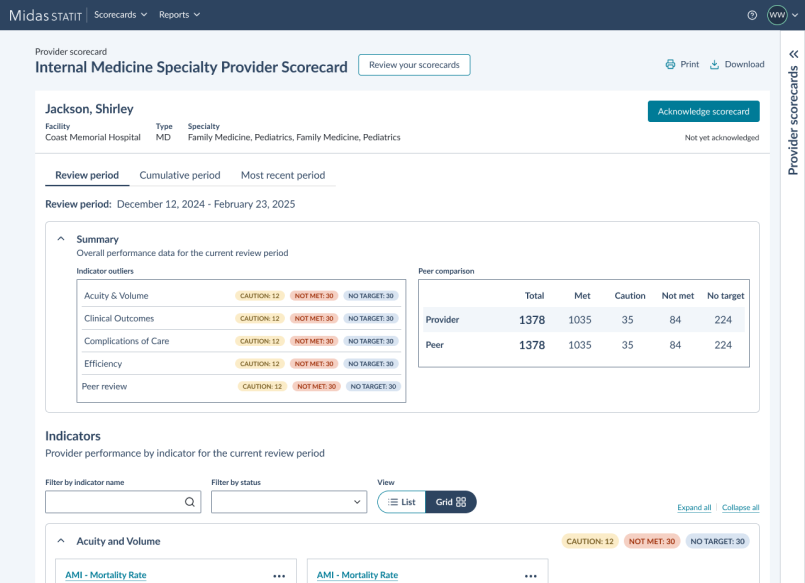
Phase 3: Extend to new frontiers (2023 to present)
Accessibility stopped being a bolt-on and became a default. New Alloy components now ship meeting accessibility standards from the start, so a team building on Alloy gets compliance without extra effort on their end. The governance model built in Phase 2 to protect quality under pressure extended naturally to cover this: accessibility is now one of the standards every new component and every new feature has to clear, the same way Alloy visual consistency does.
The responsive and mobile work that started in Phase 1’s “parity and expansion” stage has kept maturing. New components are built mobile-first rather than retrofitted afterward.
Most recently, Alloy’s standards have extended to AI-driven features. The team is developing an AI-specific UI framework and color treatments so AI features look and feel like the rest of the product instead of a bolted-on experiment, and the same governance gate that protects visual and accessibility quality now applies to AI work too. Any new AI capability has to clear Alloy consistency and accessibility standards before it ships, the same as any other feature.
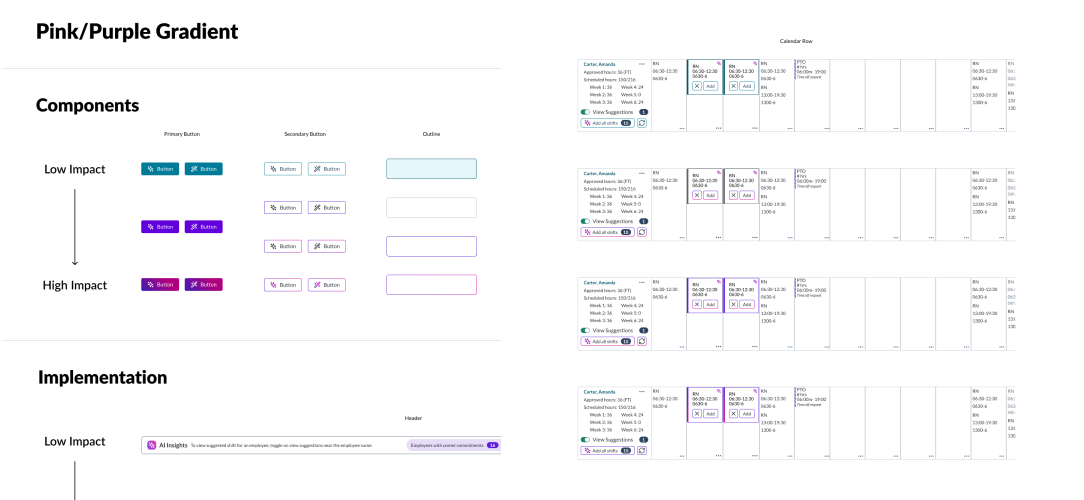
Outcome
- 500+ developers worldwide build with Alloy’s components.
- No additional design-system headcount was needed, even as engineering doubled.
- 38 designers used the Figma component library in a single year.
- 100 components live, built and maintained by a team of four engineers.
- One adopting team estimated Alloy saved roughly three months of velocity on a new product; another estimated 30–40% savings in conversion time.
- The team now owns its own process and improvement work, such as revamping color and font tokens, without my day-to-day direction.
What others said
“[Alloy is] super comprehensive and well considered. You are in an unusually good place for how long you’ve been doing this.”
Brad Frost, Big Medium
“You not only have a very thoughtfully assembled system, but you all seem to have a healthy work culture. It’s refreshing to witness.”
Jessi Hall, Big Medium